

The personal memoir might appear a difficult endeavor, but it is one of the most fulfilling approaches to retrospection of the way you have been and making sure that you live whatever you have to remember. When you understand how to write a book about your life, you can be able to keep the experiences, lessons, and feelings that have contributed to what you are today. It will enable you to organise the thoughts, visualise the choices that you have made and determine how the past has influenced your present.
You should not only tell your life story to yourself, but also to other people, be close to them and motivate them to continue their way. Consumers tend to find solace, inspiration, or guidance in the stories that they can relate to their life and therefore, your personal narrative can be useful to more people. Your autobiography or life story can be light of hope and instances of resilience, love and perseverance. Even such trivial details or the daily experience which a person shares honestly can change the lives of other people.
Over and above the process of storytelling, the process of writing can be highly therapeutic. It offers the possibility to reflect over the happenings of the past, feel proud of what you have achieved and have a clear image about what you have accomplished yourself. The process of writing your life story can also equip you to be empowered as you derive a sense of life struggles and accomplishments which will leave behind an impression on the legacy that the family, friends and the new generations will not forget. Reflecting on your past can also enable you to make some of your habits, lessons or revelations that you never thought existed previously and know yourself better.
As a decent publishing company, UK Publishing House provides various services, such as editing, ghostwriting, and marketing of books, to help the authors make their stories come true. To make sure your memoir reaches a wider audience, tools like Amazon Author Central UK are invaluable for managing your author profile and boosting visibility.
You are able to make your memories into a professional, compelling book with the help of an expert, and this really represents the experiences you have gone through. Their team would have you through all the steps in the writing process, from brainstorming ideas can be developed to the refinement of your manuscript, and in that way, your memoir is going to connect with the readers and retain the essence of your life story.

Understanding Your Purpose
Why Write Your Life Story?
Writing your life story gives you the chance to retrospect the happenings in your life, brag about your successes, and come to terms with the obstacles you have surmounted. Ask yourself the question: Is the story of my life worth telling? Can assist you to realise the importance of your individual experiences and this could be inspirational and guidance to others who have experienced the same situation. Your experience is something special, and when you record it, you will be able to leave a permanent document that will inform, reassure, and inspire your readers.
Memoir vs. Biography
One should know the distinction between a memoir and a biography. A biography is normally authored by another person and addresses the sum total of a person in a detached manner. A memoir is, however, a personal narrative, written by yourself, about your recollections, emotions, and thoughts. The memoirs are more reader-friendly as they tend to focus on particular themes or moments.
Identifying Your Main Message or Theme
In all the fine life stories, there is an overriding message or theme. Be it resilience, love, personal growth, and lessons learned through failure, knowing your central theme will be used to tell your story and to provide meaning to your book. Through this theme, you are guaranteed that your story is going to touch the readers and have an impact. If you believe, “I want to write a book,” UK publishing house can assist you in upgrading your message and select the suitable approach to write your memoir or biography so that your story of life is brought forth in the most influential manner.
Getting Started with Writing
Overcoming Initial Hesitation
Starting your book can feel intimidating. Many people hesitate because they aren’t sure where to begin or fear their story isn’t interesting enough. If you need professional writing assistance, UK Publishing House offers expert ghostwriting services to help you get started and craft your life story. The key is to focus on progress, not perfection. Remember, every story has value, and the first step is simply putting words on the page. Understanding how to start writing a book about your life can make the process less overwhelming and give you a clear direction to begin.
It may also assist in dividing the writing into small and manageable tasks. Do not consider it as a whole chapter; write one scene, one paragraph, or even a few sentences. Write notes or questions to help you remember, like what was a significant event in my childhood. Or who has done most to influence me? This type of exercise will reduce the burden of the task and will assist you in rediscovering some stories that you might have forgotten. Keep in mind that it is only at this point that you need to begin working on the content- it can be perfected later.
Ready to move forward?
Ready to Get Started with Your Life Story?
Don’t let hesitation hold you back. Take the first step and start crafting your memoir today.
Whether you’re unsure where to begin or need professional help, UK Publishing House offers expert ghostwriting services to guide you through every step of your writing journey.
Setting a Writing Routine
It is essential to be consistent when writing a manuscript. Set a schedule of writing that suits your life, be it on a daily schedule, a weekly schedule, or a few times a week. Similar brief sessions are better than the occasional extended ones. Choose doable word goals, reminders, and make your writing time a seriously important appointment with yourself. These practices will gain momentum and keep your story going in the long run.
It is desirable to have particular objectives per session. Examples are: Have you tried to complete a brief vignette on a childhood or childhood memory, a career turning point, or something personal? Monitoring can also help increase motivation because when you can see your own manuscript expand, you get an impulse to keep going. It is more convenient to the other authors to write somewhere and at the same time every single day, and it has already turned into a ritual and a wake-up call to focus on the story.
Creating a Comfortable Writing Space
The environment is highly relevant in creativity and concentration. Get somewhere that you feel encouraged and free, whether it is a silent space in your house, a window with the sunshine or a cafe in the neighborhood. Decorate your own room, add something that makes you feel inspired such as photos or notebook or anything that is valuable to you. You are more likely to immerse yourself in the depths of your memory and thoughts writing in a comfortable place.
Other considerations that one can make are to eliminate distracters like notifications, create boundaries with family members or housemates, and arrange a workspace. Long sessions can be enjoyable and full of ideas, and this can be achieved by having a pleasant and friendly writing environment.
You may want help with editing or ghostwriting; either way UK publishing house is available to assist you with whatever you may be writing, and to help you polish your work to the final phase. It is possible to rise above hesitation, create a quality routine, and a special place that fosters your creativity with the help of a professional, which will provide the basis of a successful writing experience.
Finding Inspiration and Gathering Memories
Using Journals, Photos, and Conversations
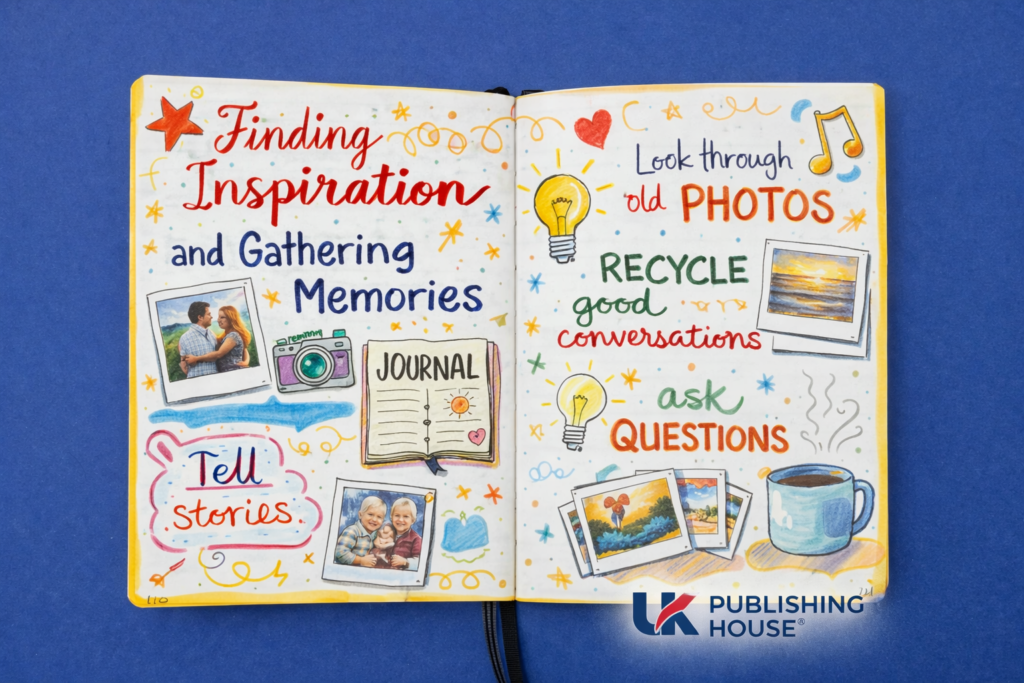
At times, memories are elusive, yet there are numerous methods of collecting inspiration for your life story. Old letters, photographs, and souvenirs can evoke vivid recollections of past experiences. Your family, friends, and colleagues can also offer their insights and stories that you may not have considered previously, adding richness and depth to your account. To learn more about how you can build a meaningful collection of life stories, check out our blog on How to Build Your Own Meaningful Collection.
Making an Outline Based on Life Events
After completing your collection of memories, put it into an outline. It is possible to arrange the events in the chronological order or arrange them according to the themes, i.e., personal development, professional milestones, relationships, or overridden milestones. This outline will give you some sort of a roadmap since you will feel less burdened to organise your chapters and have a sensible flow throughout your book. By learning how do you begin to write a book, you can turn scattered memories into a structured narrative that guides readers smoothly through your experiences.
Deciding Which Memories to Share
Not all the memories should be present. Stick to the experiences that reinforce the overall message of your book and connect with the reader. Be discriminating, and select only those stories that give some insight, emotion, or lessons learned. This makes your memoir interesting and significant.
In case you cannot find ways to put your ideas together in order or edit your manuscript, our professional team at UK Publishing House can help you, guiding and assisting you in turning your memories into a well-written, well-structured story.
Structuring Your Life Story
Choosing a Structure
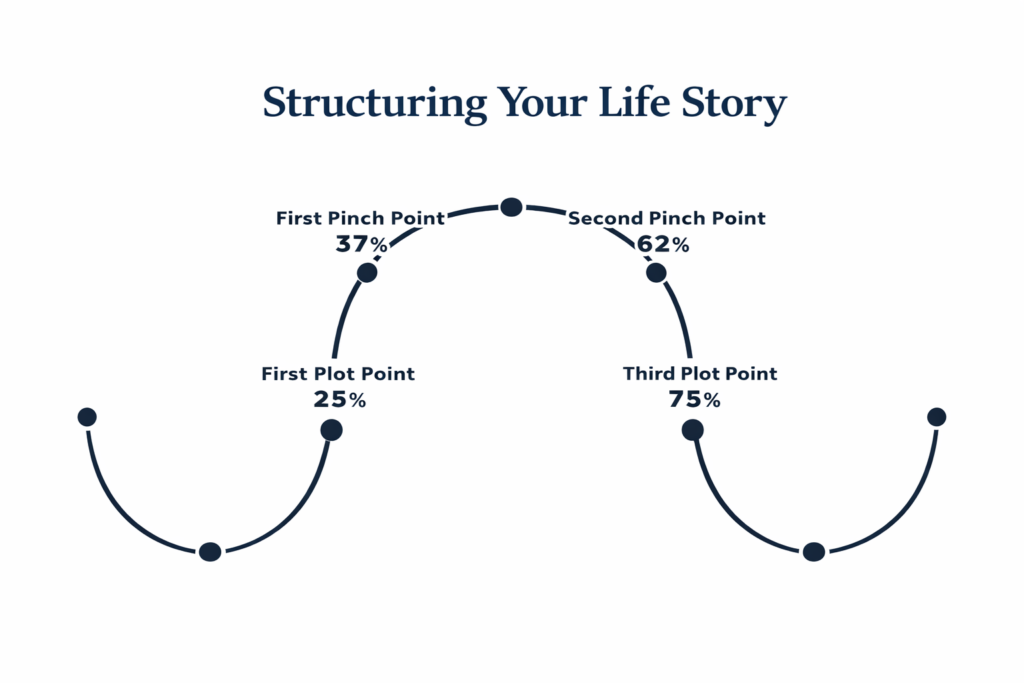
The choice of organising your life story is a great step to make a book interesting. You may take the chronological method, where the readers start with childhood and move up to the current point, or you may use thematic chapters where you look at lessons, relationships, or significant events in your life. Choosing the appropriate structure assists in keeping the clarity and leaving your story interesting to the readers till the end. Through careful planning, you will be able to write that book in such a smooth flow that the readers will not get bored.
Writing Chronologically vs. Thematically
Chronological is simple and clear to the reader, but it can be said to be, at times, predictable. Thematic structure gives you an opportunity to arrange experiences in terms of topic, emotion, or lessons learned and make your book more interactive and provocative. Take into account the best way to portray the message or theme of your life story.
Creating an Engaging Narrative Flow
Regardless of the structure you choose, your story should flow naturally, guiding readers through your experiences in a way that is both informative and emotionally resonant. Incorporating peaks, challenges, and lighter moments will maintain engagement. Understanding how to write a novel about your life enables you to craft a narrative that not only recounts events but also allows you to write the book with confidence, capturing your journey authentically.
We have professional editors at UK Publishing House, and with their assistance, we can guide you to frame your story in a manner that it will captivate your readers and make your memoir or biography worth reading.
Writing Your Story
How to Begin Writing Your Life Story
Starting your book can feel overwhelming, especially when trying to capture a lifetime of experiences. The key is to begin anywhere, whether it’s a pivotal moment, a significant relationship, or an event that shaped who you are. Don’t worry about order or perfection at this stage; simply focus on getting your thoughts onto the page. Understanding how to write the start of a book can give you the clarity and confidence to begin, knowing that the first words are just the start of your journey.
Even little attainable writing objectives can be a good idea. The momentum can be built by even writing a couple of sentences or a paragraph a day. Make eliciting questions about exploring your memory, like “What is one situation that changed my mind? Or Who has had the greatest influence upon me and why? These minute drills can produce valuable material that can be developed later. It is to be remembered that even the writing process is discovery; the story and the ideas are made visible into the picture as one begins writing the pen.
Overcoming Writer’s Block
The problem of writer’s block is a normal barrier, even to the accomplished writers. To get over it, use freewriting, a list of prompts or review your outline to get the ideas going. Impromptu, regular writing sessions can assist you in getting back on your feet when you seem out of ideas. Another way to encourage creativity would be to write at different times or in different settings. If you ever feel stuck, simply remind yourself, “I wanna write a book,” and take the first small step forward. You don’t need to finish everything at once. Little progress is still progress, and each word brings you closer to completing your story.
Writing the First Draft Without Perfection
The initial version is regarding gains, not refinements. Make your words speak, and you will not be worried about the grammar and the structure. After having your story on paper, you may revise, restructure, and cut to get a clear and effective story. Having a discussion with a person whom you trust can also bring to light the facts or views that have been ignored. You can even ask someone close to you, “Tell me a story about your life,” to capture anecdotes or viewpoints that add depth and authenticity to your manuscript.
UK Publishing House provides ghostwriting services to assist in putting your ideas on paper, so that your story is realised in the manner you had in mind. They can also give you advice on the chapter progression, tone, and structure, and make your story connect with your readers without their work taking away your personal voice.
Revising and Editing Your Work
Importance of the Revision Process
It is revision in which your manuscript really starts to shine. Once you have written your first draft, it is advised to revise because this will enable you to refine and make sense, streamline the plot, and achieve uniformity in tone and style. It is also the phase when themes become more obvious, and your story assumes a refined and integrated nature. Knowing how to write a book involves having to realise that writing is not the point once the first draft is made, it goes on to revision.
Tips for Effective Self-Editing
When self-editing, tackle your manuscript in sections rather than trying to fix everything at once. Look for redundancies, inconsistencies, and areas that could benefit from more detail or clarity. Reading aloud can help you catch awkward phrasing or pacing issues. Remember, the goal is to enhance readability and strengthen the impact of your story.
The Benefits of Seeking Feedback
Receiving feedback from trusted readers or professional editors can provide invaluable insights. They can identify blind spots, suggest improvements, and help ensure your narrative resonates with your intended audience. Our editing services at UK Publishing House are designed to help authors elevate their work, guiding you toward a polished, professional manuscript that will leave a lasting impression on readers.

Sharing Your Story
Deciding Whether to Share Early
Some authors choose to share excerpts or chapters with trusted friends, family, or beta readers during the writing process. Early feedback can provide a valuable perspective, highlight areas that need clarification, and boost confidence. However, others prefer to keep their manuscript private until it is complete, ensuring the story is fully formed before public exposure. Consider which approach aligns with your comfort level and goals.
Self-Publishing vs. Traditional Publishing
There are multiple ways to bring your life story to readers. Self-publishing offers full control over design, distribution, and marketing, allowing you to publish at your own pace. Traditional publishing provides editorial guidance, professional support, and access to established distribution channels. Learning how to start to write a book includes understanding the publishing options available and choosing the path that best suits your story and objectives.
Emotional Impact of Sharing Your Personal Story
Sharing your memoir can be an emotional experience. Releasing your personal journey into the world requires courage but can be deeply rewarding. Readers may find inspiration, comfort, or validation in your experiences, and the act of sharing can offer a sense of closure or accomplishment. At UK Publishing House, we offer publishing, marketing, and design services to help authors get their books into the hands of readers, making the process of sharing your story smoother and more accessible.
Overcoming Common Challenges
Battling Self-Doubt and Fear
It’s natural to question whether your story is worth telling or to worry about how readers will perceive it. Self-doubt and fear can slow your progress, but recognising that these feelings are common is the first step to overcoming them. Remind yourself that your experiences are valuable, and your voice deserves to be heard. Consider writing affirmations or keeping a journal to reflect on your strengths and the lessons you’ve learned. Celebrating small milestones, like finishing a paragraph or chapter, can also reinforce your confidence and motivate you to keep moving forward.
Seeking Support and Staying Motivated
Having a support system is crucial. Sharing your goals with friends, joining writing groups, or seeking guidance from professionals can provide encouragement and accountability. Understanding “how can you write a book” means acknowledging that you don’t have to face the challenges alone. With the support of UK Publishing House, you can access expert advice, editorial guidance, and motivational resources to help you stay on track and complete your manuscript. Their team can also offer tips on managing time, handling feedback, and overcoming obstacles, ensuring that you continue to make steady progress toward finishing your life story.
By approaching challenges with patience, persistence, and support, you can transform obstacles into opportunities for growth, ultimately producing a memoir that reflects your journey authentically and inspires others.
Ready to move forward?
Bring Your Story to Life with Professional Writing Services
Every story deserves to be told. Whether it’s your personal journey, a novel, or a memoir, our expert writers at UK Publishing House are here to help you shape your narrative.
Let us guide you from idea to manuscript, ensuring your story resonates with readers.
Conclusion
Final Words of Encouragement
Writing a book about your life is a courageous and deeply rewarding endeavour. Every experience, challenge, and triumph you’ve encountered contributes to a narrative that only you can tell. Many aspiring authors pause and wonder, how do you write a book about your life, but the truth is that there is no single right approach. What matters most is recognising the value of your experiences and giving yourself permission to share them. Your reflections, memories, and lessons can inspire others, and choosing to create your own story book is a powerful way to honour your journey and personal growth.
Getting Started Today
The most important action is simply to begin. You may find yourself asking, how do I write or even thinking, how can I write a meaningful story that others will care about, but the answer lies in starting small and staying consistent. Writing is not something you have to face alone, and many people discover motivation by realising how can we write honestly and openly about our experiences. When you take that first step and begin shaping my story of life, you ensure your memories and insights are preserved for the future. If you’re ready to move forward, UK Publishing House is here to support you with everything from writing assistance to book cover design, guiding you through each stage of the publishing journey.