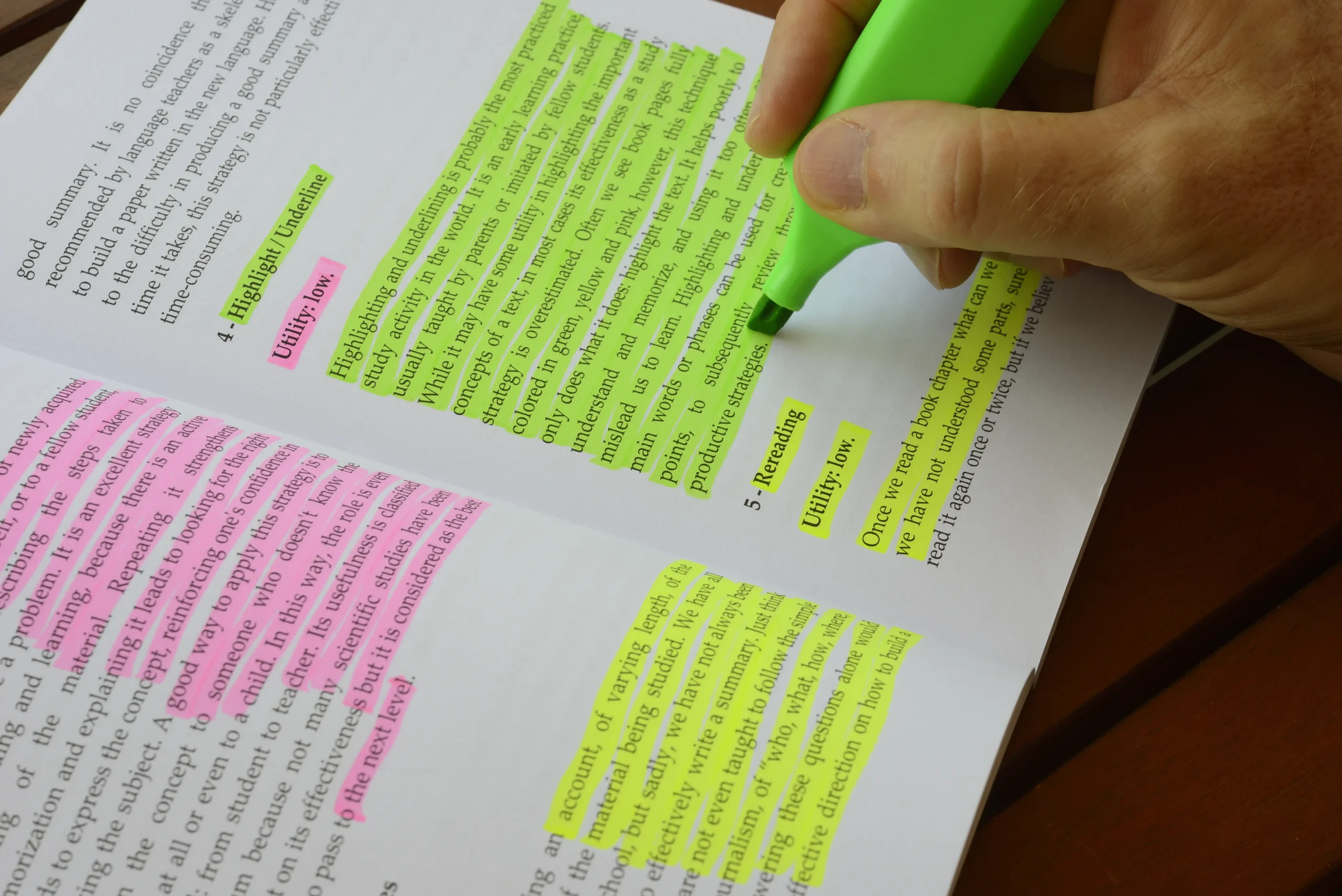
Proofreading is the final, meticulous review of a written document before it is published, submitted, or shared. Its focus is entirely on surface-level errors: grammar, spelling, punctuation, formatting, and consistency. It is not about rewriting sentences, reorganising paragraphs, or rethinking the argument. By the time you sit down to proofread, all of that should already be done. Proofreading is the last gatekeeper. It catches the small things that slipped through every previous stage of the writing process and makes sure they do not reach the reader.
The proofreading meaning, in simplest terms, is this: a careful, focused check to ensure what is written is accurate, clean, and ready for its audience. Think of it as the final polish on a piece of furniture. The design, the structure, the craftsmanship, all of that happened earlier. Proofreading is the sanding, the buffing, the moment you step back and make sure nothing is out of place before someone else sees it.
If you look it up in a dictionary, to proofread means to read and mark corrections in a piece of written or printed work. Historically, the term comes from the world of printing, where a proof was a preliminary version of a printed page. A proofreader would compare this proof against the original manuscript to ensure nothing had gone wrong during typesetting. The role has evolved, but the core principle remains exactly the same: one final, careful review before the work goes public.
A few key points worth locking in at this stage. Proofreading focuses on surface errors, not content or structure. It is always the last stage of the writing process. And its purpose is to ensure accuracy and professionalism in the finished document.
These definitions align with best practices outlined by authoritative bodies such as the Chartered Institute of Editing and Proofreading (CIEP) and the Purdue Online Writing Lab (Purdue OWL), both of which emphasise proofreading as a distinct, final-stage activity in the writing process.
Common Misconceptions Debunked
Before we go any further, let’s clear up a few myths that trip people up more often than you would expect.
Myth 1: Spellcheckers catch everything. They do not. Not even close. A spellchecker will happily approve “He went too the store” because “too” is a correctly spelled word. It does not understand context, and it cannot tell you when a perfectly valid word has been used in completely the wrong way.
Myth 2: Proofreading and editing are the same thing. They are not, and confusing the two is one of the most common mistakes people make. We will break this down properly in the next section, but the short version is that editing addresses the substance of your writing, while proofreading addresses the surface.
Myth 3: Anyone can proofread effectively without specific techniques. Reading your own work and assuming you will catch everything is not proofreading. It is hoping for the best. Effective proofreading requires deliberate strategies, and without them, your brain will autocorrect errors before your eyes even register them.
Myth 4: Proofreading is an optional extra, not something essential. If you are producing any piece of writing that another person will read, proofreading is not optional. It is part of the job. Treating it as a nice-to-have rather than a non-negotiable is how avoidable errors end up in finished work.
Proofreading vs. Editing: Understanding the Crucial Differences
This is where most of the confusion lives. If you have ever wondered whether you need editing or proofreading, or if you have ever used the two words interchangeably, you are not alone. But understanding the difference is essential, because getting them mixed up can mean paying for the wrong service or skipping a critical stage entirely.
Editing: The Big Picture Overhaul
Editing is the broader, deeper review. A good editor looks at the substance of your writing: the content, the structure, the argument, the flow, the style, the tone, and the overall effectiveness of the piece. Editing often involves significant changes. Sentences get rewritten. Paragraphs get moved. Entire sections might get cut or restructured because they are not serving the piece as a whole.
There are different levels of editing, from developmental editing (which focuses on the big structural questions like “does this argument hold together?” or “does this story arc work?”) to copy editing (which works at the sentence level, polishing clarity, consistency, and style). But in all its forms, editing is about making the writing better, not just cleaner.
An example: if a paragraph in your dissertation jumps between three unrelated ideas without a clear topic sentence, that is an editing problem. The content needs restructuring for clarity and coherence.
Proofreading: The Final Polish
Proofreading, by contrast, works on the assumption that the writing is already in good shape. The ideas are solid, the structure is sound, the style is consistent. What remains are the granular, surface-level issues: typographical errors, grammatical mistakes like subject-verb disagreement, punctuation problems such as misplaced commas or incorrect apostrophes, spelling errors including tricky homophones, consistency issues in capitalisation or hyphenation, and formatting problems like inconsistent spacing or heading styles.
An example: if that same paragraph is perfectly structured and well-argued, but contains “their” instead of “there” and a rogue semicolon, that is a proofreading problem. The content is fine. The surface needs cleaning.
When to Edit, When to Proofread
The distinction matters practically because the two processes happen at different stages. Editing comes first, while the writing is still being shaped. Proofreading comes last, after all revisions are complete.
If you try to proofread a document that still needs editing, you will waste time fixing surface errors in text that might get rewritten or deleted entirely. And if you skip proofreading because you have already had the piece edited, those small errors that crept in during the revision process will sail straight through to your reader.
Consider a scenario where you have a beautifully written business report, but it contains two instances of “it’s” where “its” should be. That is proofreading territory. Now consider a report where the executive summary contradicts the conclusion and the data in section three does not support the claims in section four. That is editing territory. The two are connected stages of the same process, but they are not the same thing, and treating them as interchangeable almost always leads to a weaker final product.
If you are working on a manuscript and unsure about where to start with finding a book editor and publisher, understanding this distinction first will save you time, money, and a fair amount of frustration.
Why Proofreading Matters: The Cost of Errors and the Gain of Precision
So why does any of this actually matter? Because errors have consequences. Real, tangible consequences that go far beyond a red mark on a page.
The Hidden Dangers of Unproofread Text
Every piece of writing you put out into the world carries your name, your brand, or your academic record with it. And when that writing contains avoidable errors, the message it sends is not “small mistake.” The message is “this person did not care enough to check.”
Loss of credibility and trust is perhaps the most significant cost. A reader who spots multiple errors in your work will start questioning everything else about it, including the quality of the ideas. Miscommunication is another risk. A misplaced comma or an ambiguous pronoun reference can change the meaning of a sentence entirely. In academic settings, errors can directly affect your grades. In professional contexts, they can cost you opportunities. A CV with a spelling mistake in the opening line is far more likely to end up in the rejection pile than the interview pile. And for businesses, errors in client-facing materials damage brand reputation and, in some cases, lead to genuine financial losses.
The Impact of Errors Across Contexts
The consequences of errors vary depending on where they appear, but they are always present. An incorrect citation format in an academic paper suggests a lack of rigour. A typo in the executive summary of a business proposal undermines confidence. Grammatical errors in website content reduce sales and damage user trust. A spelling mistake on a job application signals carelessness. Repetitive or awkward phrasing in creative writing distracts readers and breaks immersion.
| Context | Type of Error | Consequence | Impact Level |
| General Writing | Spelling, grammar mistakes | Loss of credibility; reader questions overall quality | High |
| General Writing | Poor proofreading | Signals lack of care or professionalism | High |
| Communication | Misplaced punctuation, ambiguity | Miscommunication; meaning of sentences altered | High |
| Academic Work | Incorrect citation format | Suggests lack of rigour; may reduce grades | High |
| Academic Work | General language errors | Direct negative impact on assessment outcomes | High |
| Professional (CVs) | Spelling/grammar mistakes | Application rejection; perceived carelessness | Very High |
| Business Documents | Typos in proposals/reports | Undermines confidence in competence | High |
| Business/Marketing | Errors in client-facing content | Damaged brand reputation; potential financial loss | Very High |
| Websites/Online Content | Grammatical errors | Reduced user trust; lower sales or engagement | High |
| Creative Writing | Repetition, awkward phrasing | Breaks reader immersion; reduces readability | Medium |
The Credibility Advantage
On the flip side, error-free writing does something quietly powerful. It projects professionalism, competence, and reliability. It tells the reader that you take your work seriously, that you value their time, and that you have the attention to detail they can trust. Whether you are submitting a university assignment, pitching to a new client, or publishing your first book, flawless writing establishes authority, ensures clear communication, enhances reader engagement, and reflects the high standards that your audience expects.
Types of Errors to Look For: A Comprehensive Checklist
Knowing what proofreading is and why it matters is one thing. Knowing exactly what you are looking for is another. Here is a breakdown of the most common error categories, with examples to sharpen your eye.
Grammatical Glitches
Grammar errors are the backbone of most proofreading passes. Subject-verb agreement is a frequent offender (“The team are meeting” versus “The team is meeting,” depending on whether you are treating the subject as singular or plural in context). Verb tense inconsistency is another common issue, particularly in longer documents where a writer might slip from past tense to present without noticing. Pronoun agreement and clarity problems crop up regularly too (“Everyone should bring their book” is widely accepted in informal writing, but some style guides flag it). Then there are dangling modifiers, run-on sentences, comma splices, and sentence fragments, all of which can slip past a tired writer undetected.
Punctuation Pitfalls
Punctuation errors are deceptively common. Missing or misused commas account for a significant share of the problems proofreaders catch, whether it is a missing Oxford comma in a list, a forgotten comma after an introductory clause, or a splice that should be a full stop. Semicolons are frequently misused or avoided entirely because writers are unsure of the rules. Apostrophe errors, particularly the confusion between possessives and plurals, remain stubbornly persistent. Hyphenation in compound adjectives and prefixes trips people up too, and the difference between an en dash and an em dash is something most writers never quite nail down.
Spelling Slip-ups
Spelling errors go beyond simple typos, though “hte” for “the” is certainly a classic. Homophones are the real trap. “Their,” “there,” and “they’re.” “To,” “too,” and “two.” “Affect” and “effect.” “Complement” and “compliment.” These are the errors that spellcheckers cannot catch because both options are valid words. Regional spelling variations also matter. If you are writing for a UK audience, it is “colour” not “color,” “organise” not “organize,” and “centre” not “center.” Consistency is key, and mixing British and American spellings in a single document is a red flag that proofreading was either rushed or skipped entirely.
Syntax and Sentence Structure Snags
Sometimes a sentence is grammatically correct but still reads badly. Awkward phrasing, convoluted sentence construction, unnecessary passive voice, redundancy, and a lack of sentence variety can all make writing feel laboured and difficult to follow. While these issues often fall more into the territory of copy editing, a proofreader with a good eye will flag the most obvious instances, particularly where clarity is genuinely affected.
Formatting and Consistency Faux Pas
Formatting errors are easy to overlook because they are visual rather than linguistic. Inconsistent heading levels, varying bullet point styles, erratic spacing between paragraphs, discrepancies in citation formatting, and random font changes can all make a document look unprofessional, even if the actual writing is strong. If you are working on something like a manuscript, paying attention to how to format your manuscript properly before you proofread will save you a significant amount of trouble at this stage.
Word Choice and Tone Troubles
The final category covers precision in language. Using vague or imprecise words when a sharper alternative exists, adopting the wrong register for your audience (overly informal in academic writing, or stiff and corporate in a blog post), repeating the same word three times in two sentences, or using jargon that excludes the reader rather than includes them. These issues can undermine even well-structured, grammatically clean writing.
Spot the Error Challenge: Test Your Eye
Here is a short paragraph. Read it carefully and see how many errors you can find before scrolling to the answer.
“The team have been working on there latest report for over too weeks, and they beleive it’s the most comprehensive peice of research their department has produced. However, alot of the data still needs to be verified, the deadline are approaching fast.”
Found them all? Let’s see.
“There” should be “their” (possessive, not locative). “Too” should be “two” (a number, not an intensifier). “Beleive” is misspelled; the correct spelling is “believe.” “Peice” should be “piece.” “Alot” is not a word; it should be “a lot.” “The deadline are” has a subject-verb agreement problem; it should be “the deadline is.” And the comma before “the deadline” creates a comma splice; it should be a full stop or a semicolon.
Seven errors in four sentences. And every single one of them would sail past a basic spellchecker. This is why proofreading, proper proofreading, matters.
The Proofreading Process: Step-by-Step Techniques for Success
Now for the practical bit. Here is a systematic approach to proofreading that you can apply to any document, whether it is a 500-word blog post or a 100,000-word manuscript.
Preparing Your Document for Proofreading
Before you start, make sure the groundwork is done. Complete all major revisions and edits first. There is no point proofreading text that is going to be rewritten next week. Set aside dedicated, uninterrupted time. Proofreading while distracted is barely proofreading at all. Close unnecessary tabs, silence your phone, and give yourself the mental space to focus.
Expert Tip: Do not proofread immediately after writing. Your brain is too familiar with the text and will autocorrect errors before your eyes register them. Step away. Go for a walk. Come back in a few hours or, better yet, the next day. Fresh eyes catch what tired eyes miss.
Strategic Proofreading Passes: A Multi-Layered Approach
The single biggest mistake people make when proofreading is trying to catch everything in one read. That is not how it works. The most effective approach is multiple focused passes, each targeting a specific category of error.
Step 1: The Global Scan for Major Issues
Start with a general read-through. You are not looking for individual commas here. You are reading for overall flow, obvious mistakes, and anything that jumps out. Does the writing make sense? Are there any glaring gaps or repeated sections? This is your first chance to hear how the document actually sounds.
Expert Tip: Read aloud. Seriously. Reading your text out loud forces you to slow down and process every word individually rather than scanning in chunks. It reveals awkward phrasing, missing words, and grammatical errors that silent reading hides. If reading aloud feels strange, use a text-to-speech tool instead. Hearing your words spoken back to you highlights problems you would never spot on screen.
Expert Tip: Print it out. Reading a physical copy changes how your brain processes the text. You will catch errors on paper that you have become completely blind to on screen. Use a red pen and mark as you go.
Step 2: Focused Passes for Specific Error Types
After the global scan, go back and do dedicated passes for each major category.
Grammar Pass: Read through focusing solely on verb tenses, subject-verb agreement, and pronoun usage. Ignore everything else for now.
Punctuation Pass: Scrutinise every comma, full stop, apostrophe, and semicolon. Check that every punctuation mark is doing its job correctly.
Spelling Pass: Go through every word, paying particular attention to homophones and commonly misspelled terms. Do not trust your spellchecker to have caught them all.
Formatting and Consistency Pass: Check headings, spacing, fonts, citation styles, and any other visual or structural elements for consistency.
Expert Tip: Check for one error type at a time. It sounds slow, but it is dramatically more effective than trying to catch everything simultaneously. Your brain can only hold so many filters at once, and focused passes exploit that limitation rather than fighting against it.
Step 3: Alternative Reading Methods
This is where the professional techniques come in, the ones that separate casual proofreading from the real thing.
Expert Tip: Change the font or text size. This is a surprisingly effective trick. Your brain has memorised the visual pattern of your document on screen. Change the font from Times New Roman to Arial, bump the size up to 14pt, and suddenly the text looks unfamiliar enough that errors start jumping out.
Expert Tip: Proofread in sections. Instead of attempting the entire document in one sitting, break it into manageable chunks. Three to five pages at a time. Take a short break between sections to reset your focus.
Expert Tip: Start from the end. This one sounds counterintuitive, but it works. Reading sentences in reverse order, starting from the last sentence and working your way to the first, strips away the meaning and forces you to focus on individual words and sentence construction. Errors that were invisible in context become obvious in isolation.
Expert Tip: Use text-to-speech tools. Built-in text-to-speech software on your computer or phone can read your document back to you. Hearing the words spoken aloud catches missing words, awkward phrasing, and grammatical problems that visual reading misses entirely.
Developing a Personalised Proofreading Workflow
No single method works perfectly for everyone. The best approach is to combine the techniques that suit your working style, your common errors, and the type of document you are working on.
Ask yourself a few questions. What are the mistakes you make most often? If you know you always struggle with comma splices, build a dedicated comma pass into your routine. What type of document are you proofreading? A creative piece demands a different kind of attention than a technical report. How much time do you have? If time is tight, prioritise the global scan and a focused grammar and spelling pass, then use an automated tool for a quick punctuation check.
The goal is not to follow a rigid formula. It is to build a repeatable process that catches the things that matter most, consistently.
Counteracting Cognitive Biases: Why We Miss Our Own Errors
There is a scientific reason you keep missing your own mistakes, and it is not because you are careless. It is because your brain is working against you.
Confirmation bias means you see what you expect to see. When you wrote “the the” in a sentence, your brain knows you meant to type “the” once, so it shows you one “the” even though there are two on the page. Automaticity is the process by which your brain fills in gaps and corrects errors automatically during reading, based on what it already knows the text is supposed to say.
These are not character flaws. They are normal features of human cognition. But they are also the reason why self-proofreading is inherently limited and why the techniques described above, changing fonts, reading aloud, reading backwards, and taking breaks, are not optional extras. They are deliberate strategies to counteract the biases your brain brings to the task.
Taking frequent breaks, changing the presentation of the text, and getting a second pair of eyes on your work are the three most effective counters to these biases. If your document is high-stakes, combining all three is the safest approach.
Essential Tools and Resources for Effective Proofreading
Automated Proofreading Tools: Strengths and Limitations
Automated tools are useful. Let’s be clear about that. They catch obvious errors, suggest improvements, and provide basic style checks at a speed no human can match. But they also miss context-dependent errors, misinterpret nuances, and sometimes make suggestions that would actively make your writing worse.
The sensible approach is to treat automated tools as a first pass, not a replacement for human review. Use them to catch the low-hanging fruit, then do your own focused review on top.
| Aspect | Feature/Issue | Description | Implication |
| Strength | Error detection | Identifies basic spelling and grammatical mistakes quickly | Improves baseline accuracy |
| Strength | Speed and efficiency | Processes text faster than human proofreading | Saves time |
| Strength | Style suggestions | առաջարկs basic improvements in tone, clarity, and readability | Enhances writing quality (to a degree) |
| Limitation | Lack of contextual understanding | Fails to fully grasp meaning, tone, or intent | May overlook deeper issues |
| Limitation | Misinterpretation of nuance | Struggles with subtle language, idioms, or complex phrasing | Can suggest incorrect changes |
| Limitation | Overcorrection | Sometimes recommends changes that worsen clarity or accuracy | Requires careful review |
| Best Practice | First-pass tool | Useful for catching obvious, surface-level errors | Should not be final step |
| Best Practice | Human review required | Needs follow-up proofreading for context, coherence, and intent | Ensures overall quality and precision |
Indispensable Manual Resources
Beyond software, certain manual resources are genuinely invaluable. Online dictionaries like Merriam-Webster and Oxford Learner’s Dictionaries are essential for verifying precise word meanings, checking spellings, and finding synonyms. Style guides such as the Chicago Manual of Style, APA, MLA, and the AP Stylebook are crucial for maintaining consistency, particularly in academic and professional writing where specific conventions must be followed. And a personal error log, a simple document where you record your own most frequent mistakes, becomes one of the most powerful proofreading tools you can build over time.
Beyond the Screen: Auditory and Physical Aids
Reading aloud remains one of the most effective proofreading techniques available. It forces you to engage with every word individually and hear the rhythm and flow of your sentences. Printing your document out changes your visual perception of the text and often reveals errors that are invisible on screen. And something as simple as using a ruler or your finger to track line by line can prevent the eye from skipping words or jumping ahead.
When to Call in a Professional Proofreader
Recognising the Limits of Self-Proofreading
Even with every technique in this guide applied diligently, there is a limit to how effectively you can proofread your own work. Familiarity with the text creates blind spots that no amount of font-changing or reverse reading can fully overcome. This is not a failure. It is simply how the human brain processes familiar information.
There are specific situations where professional proofreading services become not just helpful but necessary. High-stakes documents where errors are genuinely unacceptable. Time constraints that prevent a thorough self-review. Documents you have already proofread multiple times but still feel uncertain about. Exceptionally long or complex texts like dissertations, theses, or book manuscripts. And documents that require adherence to a specific style guide you are not fully familiar with.
Critical Documents: When Perfection is Non-Negotiable
Certain documents carry consequences that make professional proofreading a smart investment rather than a luxury. Academic dissertations and theses, where years of research are being assessed. Books or manuscripts heading for publication. Legal documents and contracts where a single ambiguity can have financial or legal implications. High-stakes business proposals or reports. And CVs and cover letters for the jobs that genuinely matter to your career.
If you are curious about what the proofreading profession actually looks like from the other side, reading about how to get hired as a freelance proofreader gives you a surprisingly useful understanding of what trained proofreaders actually do and what to look for when hiring one.
Choosing a Professional: What to Look For
When selecting a professional proofreader, look for credentials and relevant experience, ideally someone who is certified or has demonstrable expertise in your subject area. Check testimonials and ask for portfolio samples. Make sure they communicate clearly and commit to realistic turnaround times. Verify that they understand your specific needs and the style guide your document requires. And always ensure their pricing is transparent before you agree to anything.
Seeking certified proofreaders, academic writing specialists, or editors with significant experience is not just about quality. It is about trust. You are handing over something you have worked hard on, and you need to know it is in competent hands.
Advanced Proofreading Best Practices and Expert Tips
Cultivating the Proofreading Mindset
Proofreading is not just a mechanical task. It requires a particular mental approach. The best proofreaders develop what you might call a proofreading mindset: a critical, slightly detached perspective that allows them to see the text as it actually is, rather than as they intended it to be.
Mindfulness plays a role here. Approaching the task with focused, deliberate attention, rather than half-reading while thinking about dinner, makes a measurable difference. Detachment matters too. Try to read your work as though someone else wrote it. Pretend you are reviewing a colleague’s document. That shift in perspective alone can reveal errors you have been blind to for weeks. And patience cannot be overstated. Rushing a proofreading pass is barely better than not doing one at all.
Leveraging Checklists and Error Tracking
Expert Tip: Use a dedicated proofreading checklist. Whether it is digital or physical, a checklist ensures you systematically review every critical area without relying on memory. It prevents the common problem of remembering to check spelling but forgetting to verify citation formatting, or catching every comma but overlooking heading consistency.
Expert Tip: Know your personal error patterns. Over time, every writer develops a set of recurring mistakes. Maybe you consistently struggle with comma splices. Maybe you always write “practise” when you mean “practice.” Whatever your patterns are, tracking them in a personal error log and specifically targeting them during your proofreading passes turns your weaknesses into a focused, efficient checking routine.
Tailoring Your Approach for Different Content Types
Not all documents need the same kind of attention. The proofreading priorities for an academic essay are different from those for website content, creative writing, or business documents.
Academic Essays: Prioritise citation accuracy, formal tone, adherence to your required style guide, and consistency in terminology. Academic writing has specific conventions, and deviating from them, even in small ways, costs marks.
Website Content: Focus on conciseness, scannability, and clarity. Web readers skim. Errors in headlines, subheadings, and opening sentences are particularly costly because those are the parts readers see first. If SEO keywords are involved, check that they read naturally within the text and are not awkwardly forced.
Creative Writing: Pay attention to voice consistency, dialogue punctuation, and the rhythm of your sentences, while still catching the standard grammar and spelling issues. Creative writing gives you more stylistic freedom, but that freedom does not extend to basic errors.
Business Documents: Clarity and professionalism are paramount. Check for consistent terminology, accurate data references, and a tone that matches your audience. A business document with sloppy proofreading undermines the credibility of whatever you are proposing.
Your Path to Error-Free, Impactful Writing
If you have read this far, you now understand more about proofreading than most people ever will. You know the crucial difference between editing and proofreading and why confusing the two costs time and quality. You understand the very real impact that errors have on credibility, grades, professional opportunities, and reader trust. You have a systematic, multi-pass approach to proofreading that you can apply to any document. You know which tools and resources are genuinely useful and where their limitations lie. And you know when self-proofreading is enough and when calling in a professional is the smarter choice.
But knowing all of this only matters if you put it into practice. The techniques in this guide work. Reading aloud catches what silent reading misses. Changing fonts and printing documents breaks the familiarity that hides errors. Focused, single-category passes are dramatically more effective than trying to spot everything at once. And tracking your own error patterns turns a general skill into a targeted, efficient habit.
Proofreading is not a gift that some people have and others do not. It is a skill, and like every skill, it improves with conscious effort and consistent practice. The more you do it deliberately, the sharper your eye becomes. The more you understand the common categories of errors, the faster you spot them. And the more you build it into your writing process as a non-negotiable final step, the more your writing will reflect the care and precision it deserves.
Your words matter. They carry your ideas, your arguments, your stories, and your professional reputation. Give them the final check they deserve.