There’s a moment that every author, designer, or publisher knows. You’ve finished the work. The manuscript is done, the cover is ready, and now you’re standing at a decision point that matters more than most people realise, how is this book actually going to exist in the physical world? Not as a PDF, not as a file on your desktop, but as a real, holdable, lasting object.
For a lot of people, the answer is a hardback book. And not without good reason.
Hardback book printing sits in a different category to paperback production entirely. It’s heavier, more substantial, more demanding to produce, and that’s exactly the point. When someone picks up a hardback, they feel the difference before they’ve read a single word. The weight of it, the way the cover holds its shape, the quality of the binding, all of it communicates something that a paperback simply can’t. It says: this was made to last.
But the process of producing a hardback, especially if you’re coming to it for the first time, can feel genuinely opaque. There’s terminology to understand, decisions to make about binding types and paper stocks and cover finishes, and a meaningful financial investment involved. The margin for error is smaller than it is with digital formats or print-on-demand paperbacks, because every choice you make gets locked into the physical object.
This guide exists to make all of that navigable. Whether you’re an author producing your first hardcover edition, an independent publisher working on a premium run, a business creating a prestige publication, or someone commissioning a bespoke project like a family history or an art portfolio, we’re walking you through everything, from what a hardback actually is and how it’s constructed, to how to prepare your files, manage your costs, and find the right printing partner in the UK.
What is a Hardback Book? Definition, History, and Why It Still Matters
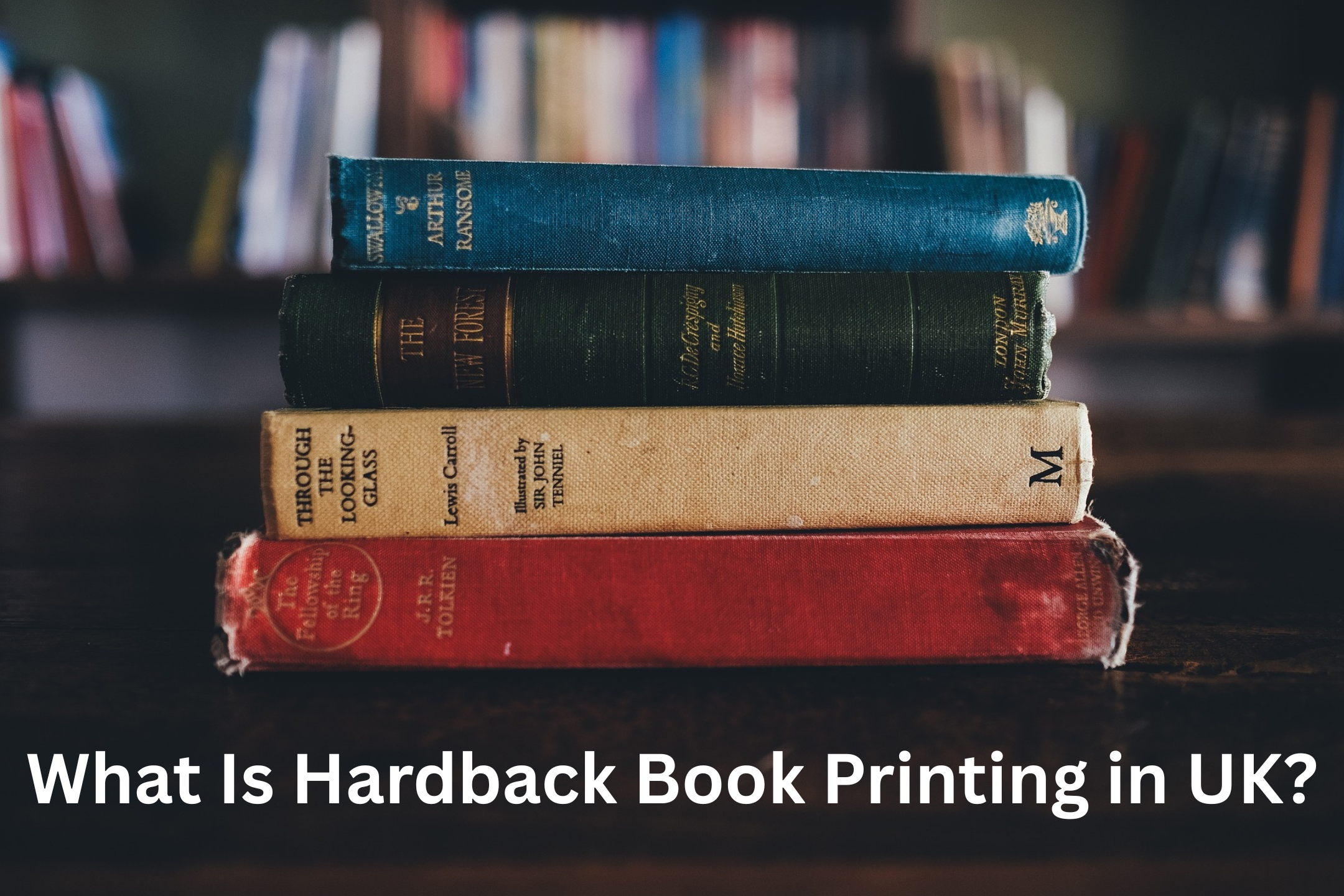
A hardback book, also referred to as a hardcover book, is defined by its rigid protective cover, typically constructed from boards made of thick cardboard or binder’s board, which are then wrapped in cloth, paper, leather, or other materials. Unlike a paperback, which uses a flexible paper cover glued directly to the text block, a hardback’s cover is a separate case into which the text block is fitted. That distinction in construction is what gives hardbacks their characteristic durability, their feel, and their presence.
The history of hardback books stretches back centuries. Before modern manufacturing, virtually all bound books used rigid covers, because they were the only practical way to protect pages intended to last. Medieval manuscripts bound between wooden boards, later replaced by cardboard and cloth as printing scaled up across Europe, are the direct ancestors of the hardback you’d find in a bookshop today. The format has survived not because it’s the cheapest or the most convenient, but because it’s still the best when the goal is longevity.
That enduring quality is the first and most important reason authors and publishers choose hardback printing. A hardback book, properly produced, can survive decades of use without significant deterioration. The spine holds, the pages remain clean, the cover stays intact. For reference books, academic texts, art books, cookbooks, children’s books, and any title intended to be kept and returned to repeatedly, that durability isn’t a luxury, it’s a practical requirement.
Beyond durability, there’s the question of perceived value. Hardbacks carry a cultural weight that paperbacks don’t. They’re associated with quality, with seriousness, with permanence. In the book trade, hardback publication has traditionally preceded paperback release because it signals that a title is important enough to merit the premium format first. For independent authors and publishers, choosing to produce a hardback edition communicates something to readers about the care and intention behind the work. That psychological impact is real and it affects buying decisions.
Hardbacks also tend to hold their resale value better than paperbacks, particularly for first editions, limited runs, or books in genres where collectibility matters. If you’re thinking about your book as a long-term asset, something that will be valued, passed on, and treasured, hardback is the format that serves that ambition best.
The Anatomy of a Hardback Book: What It’s Actually Made Of
Understanding what a hardback book is physically made of helps enormously when you start making decisions about production. Each component has a specific function and a specific set of choices attached to it.
The cover boards are the rigid front and back panels, the defining element of any hardback. They’re made from a thick binder board and then wrapped in whatever cover material you’ve chosen, whether that’s cloth, laminated paper, faux leather, or genuine leather. The quality of the boards affects how the book sits on a shelf and how it holds up to handling.
The spine connects the front and back covers and holds the text block in place. In a well-made hardback, the spine is strong enough that the book can be pulled from a shelf by the spine without any risk of damage. It’s also the primary visible surface when the book is shelved, which makes it important for both function and design.
Endpapers, sometimes called endsheets, are the pages glued to the inside of the front and back covers, providing the structural join between the cover and the text block. Plain white endpapers are standard, but coloured or custom-printed endpapers are one of the most effective and relatively affordable ways to elevate a book’s interior presentation. Opening a hardback to find a beautifully designed endpaper sets a tone before the reader has reached the first page.
The text block is the assembled, printed, and bound interior pages. Everything else is, in a sense, built around protecting and presenting the text block.
Headbands and tailbands are the small decorative fabric strips visible at the top and bottom of the spine when the book is open. They’re a finishing detail that distinguishes a carefully produced hardback from a basic one. Historically they had a reinforcing function; today they’re primarily aesthetic, but they’re the kind of detail that bookbinders and book lovers notice immediately.
Optional elements include dust jackets, the removable printed paper cover that wraps around the outside and provides additional design space, ribbon markers, which are integrated fabric bookmarks built into the binding, and slipcases, which are custom-made boxes for housing precious or collectible editions. Each of these adds cost, but each also adds a tangible dimension to the finished product that certain projects absolutely warrant.
Hardback Binding Types: Understanding Your Options
The binding method you choose determines not just how your book is constructed but how it performs over time. There are three main approaches to hardback binding, and the right one depends on your project’s purpose, your budget, and how long you need the book to last.
Case-bound binding is the most commonly used method for hardback books. The text block, which is typically either perfect bound or Smyth-sewn, is glued into a pre-made case (the cover). It’s cost-effective for a wide range of print quantities, compatible with most cover material choices, and the standard method for the majority of commercial hardback publishing. Novels, general non-fiction, and most trade hardbacks are case-bound.
Smyth-sewn binding is the premium option and, for books intended to last or withstand heavy use, it’s worth every penny of the additional cost. In Smyth-sewn production, the pages are first folded into signatures, individual sections of usually sixteen or thirty-two pages, and those signatures are then sewn together through their folds with thread before the entire text block is glued into the cover. The result is a book that lies significantly flatter when open, puts less stress on the binding with each use, and remains structurally sound through thousands of openings. Academic texts, art books, cookbooks, reference books, and any book intended to be used rather than just read once benefit enormously from Smyth-sewn construction. If you’re producing a book you want to still be in good condition in twenty years, Smyth-sewn binding is the choice to make.
Perfect bound with hardcover uses the same adhesive spine technique as a standard paperback, pages are glued along the spine edge to form the text block, but then attaches that text block to a rigid hardcover case. It’s more economical than Smyth-sewn and has a faster production time, but the binding is less durable and the book doesn’t lie as flat when open. For hardback projects where Smyth-sewn isn’t necessary or within budget, perfect bound with hardcover is a reasonable middle ground.
Spiral-bound hardcover is a niche option, but worth mentioning for specific project types, journals, portfolios, workbooks, and planuals where lay-flat functionality is essential and the hardcover provides structural rigidity for a product that needs to stand upright on a desk or be written in while fully open.
Designing Your Hardback: Customisation and Aesthetics
One of the genuine pleasures of hardback book printing is the range of design choices available to you. A hardback offers considerably more creative territory than a paperback, and those choices compound, the right combination of cover material, finish, and special features can produce something that feels genuinely exceptional.
| Customisation Feature | Description | Aesthetic Impact | Durability Impact | Cost Impact (Low / Medium / High) |
|---|---|---|---|---|
| Cover Material (e.g., Linen) | Fabric textured material covering the boards | Classic, elegant, tactile | Good resistance to scuffs | Medium |
| Cover Material (e.g., Laminated Paper) | Printed paper wrapped around boards, protected by laminate | Versatile for full-colour designs, modern | Varies by laminate type (gloss or matte provides protection) | Low – Medium |
| Cover Finish (e.g., Matte Lamination) | Non-glossy protective layer over printed paper | Sophisticated, muted finish, reduces glare | Good protection against minor scratches | Low |
| Cover Finish (e.g., Spot UV Varnish) | Glossy clear coating applied to specific areas | Highlights design elements, creates contrast | Minimal direct durability impact, enhances surface protection | Medium |
| Embossing / Debossing | Raised (embossed) or recessed (debossed) design on cover or spine | Premium, tactile, adds depth | Minimal durability impact, primarily aesthetic | High |
| Foil Stamping | Metallic or coloured foil pressed onto cover | Luxurious, eye-catching, special effect | Good durability if applied correctly | High |
| Custom Printed Endpapers | Endsheets printed with a unique design or pattern | Personalised, enhances theme and branding | Minimal durability impact, mostly aesthetic | Medium |
| Ribbon Marker | Fabric ribbon bound into the spine | Practical, adds a luxurious touch | Good for long-term usability | Medium |
| Gilded Edge (e.g., Gold) | Metallic foil applied to the edges of the text block | Highly luxurious appearance | Excellent protection against dust and moisture | High |
Cover materials range from cloth, linen and buckram being the most common options, both giving a tactile, classic quality that photographs beautifully, to laminated paper wraps, which allow full-colour cover designs that would be impossible with a fabric cover. Faux leather and genuine leather are available for premium or bespoke projects and command a corresponding price. The choice of cover material sets the overall tone of the book before any printing or finishing is considered.
Finishes applied to paper-wrapped covers dramatically change the look and feel. Matte lamination gives a sophisticated, contemporary finish that reduces glare and feels pleasantly smooth to the touch. Gloss lamination gives vibrant colour reproduction and a high-shine appearance. Soft-touch lamination has become increasingly popular for premium titles, it has a velvety texture that’s immediately recognisable as a quality signal. Beyond lamination, UV spot varnish applies a glossy coating to specific design elements rather than the whole cover, creating contrast and highlighting, the title might catch the light differently to the background, for instance. Foil stamping presses metallic or coloured foil onto the cover surface and is one of the most visually striking finishes available, particularly effective on cloth covers where it creates a genuinely luxurious effect. Embossing raises a design element above the cover surface; debossing recesses it. Both create tactile depth that’s impossible to reproduce digitally.
Endpapers, as mentioned earlier, offer an often-underused opportunity to add character to the interior. Custom-printed endpapers featuring a pattern, illustration, or design relevant to the book’s content are a detail that readers remember and discuss.
Ribbon markers, gilded edges, where the edges of the text block are coated in metallic foil, and custom headbands round out the more premium options. Gilded edges in particular are a strong signal of a prestige edition and provide practical protection against dust and moisture at the book’s edges.
Choosing Paper Stock and Finishes
The paper inside your book matters as much as the cover around it. Paper weight is measured in GSM, grams per square metre, and it affects the book’s overall feel, its opacity, and how much it shows through from one side to the other. Standard novel interiors typically use paper in the 80-90 GSM range. Higher GSM papers feel more substantial and are appropriate for art books, photography books, or any title where the paper itself contributes to the reader’s experience.
Finish affects both how the page looks and how images reproduce. Uncoated paper has a natural, slightly textured feel and is ideal for text-heavy books, it reads comfortably and doesn’t reflect light. Gloss-coated paper produces rich, vibrant colour reproduction and is the standard choice for heavily illustrated or full-colour books. Matte-coated paper sits between the two, it reproduces colour well without the reflective glare of a gloss coat.
Opacity is the property that prevents text or images on one side of the page from showing through the other. For text-heavy books especially, high opacity paper is important, low opacity creates a visual noise that’s tiring to read.
Always request paper samples from your printer before committing. Reading about paper finishes is useful; holding them is decisive.
The Power of Professional Cover Design
A hardback cover has more design real estate than a paperback, and it demands more of the designer working on it. The dust jacket, if your book has one, wraps around the entire book and includes not just the front cover but the spine, the back cover, and the inside flaps, each of which has a function. The spine has to work at a small scale on a bookshelf. The back cover has to work independently as a sales object. The flaps traditionally carry author biography and an extended description.
For hardbacks without dust jackets, the cover design is printed directly onto or embedded into the cover material, which changes the approach considerably. Foil, embossing, and debossing become the primary expressive tools rather than full-colour photography or illustration.
If you want guidance on professional cover production, our cover designing services are built for exactly this kind of work, producing hardback-specific designs that understand the technical demands and aesthetic opportunities of the format. Knowing the book cover design cost before you begin budgeting is important, and it’s worth having that conversation early so you can plan appropriately.
Mastering File Preparation for Hardback Printing
File preparation is where projects go wrong. Not because the files are bad, but because print has specific technical requirements that differ from screen, and most people working on a book design haven’t encountered all of them before. Understanding these requirements before you build your files saves significant time and cost later.
Bleed, Trim, and Safe Margins
Bleed refers to design elements that extend beyond the final trim edge of the page. When a printer cuts printed sheets to size, there’s a small amount of variation, never perfectly on the line. Bleed compensates for this by ensuring that background colours, images, and design elements that reach the edge of the page extend at least 3mm beyond the trim line. Without bleed, you risk thin white lines appearing at the edges of finished pages where the paper shows through.
The trim line is the exact point at which the page will be cut. The safe margin, sometimes called the live area, is an inner boundary, typically at least 10mm from the trim, within which all critical content (text, key image elements, any detail the reader must be able to see) must sit. Elements placed outside the safe margin risk being partially or entirely cut off.
Incorrect bleed and margin setup is one of the most common causes of printing errors, and it’s entirely preventable. Always build files with the correct specifications from the start rather than trying to add bleed at the end.
Colour Mode: CMYK, Not RGB
Screens display colour using the RGB model, red, green, blue, producing colour through light. Print uses the CMYK model, cyan, magenta, yellow, and black (key), producing colour through ink. The two colour spaces are different, and colours that look vivid on screen can look muted, shifted, or simply wrong when printed if the files haven’t been converted to CMYK.
All images and design elements in your print files should be in CMYK mode before you submit them. This is set within your design software, Adobe InDesign, Affinity Publisher, and similar applications all allow you to work natively in CMYK. If you’re converting from RGB files, review the colours carefully after conversion, as some colours (particularly vivid blues and greens) shift noticeably.
Image Resolution
Print requires higher resolution than screen display. Images should be a minimum of 300 DPI (dots per inch) at the size they’ll be printed. Line art, logos, text outlines, black and white illustrations, should ideally be at 600–1200 DPI. Low-resolution images look sharp on screen and soft or pixelated when printed, and this cannot be fixed after the fact by scaling down, the underlying image data isn’t there.
Font Embedding and PDF Export
When you export your files to PDF for submission to your printer, all fonts must be embedded in the file. If fonts aren’t embedded, the printer’s system may substitute a different typeface, with unpredictable results. Most design applications embed fonts automatically during PDF export if the correct settings are used. The correct PDF standard for commercial printing is typically PDF/X-1a or PDF/X-4, your printer will confirm which they prefer.
Before submitting anything, run a preflight check, most PDF software including Adobe Acrobat Pro includes a preflight function that checks for common errors including missing fonts, low-resolution images, and incorrect colour profiles. Fixing problems at preflight is far cheaper than discovering them after printing has begun.
Proofreading and Quality Checks
A print-ready file needs more than technical correctness, it needs to be editorially clean. Proofreading at the file stage is the final opportunity to catch anything that has slipped through earlier rounds of editing, and it’s worth treating it seriously.
This means reading the entire document again, ideally after some time away from it, and ideally with another pair of eyes as well as your own. Page numbers, headers and footers, chapter titles, the table of contents, all of these are areas where errors commonly occur and are frequently overlooked. Check that the text flows correctly across page breaks. Verify that any images are captioned correctly. Confirm that the spine text is the right way up.
Most professional printing projects also benefit from our editing services at some point in the process, whether that’s substantive editing of the manuscript earlier in production or final proofreading of the formatted file before submission. The cost of catching an error before printing is negligible; the cost of reprinting is not.
Always request a physical proof from your printer before committing to a full production run. A physical proof is a single copy of the finished book produced exactly as the full run will be. Reviewing it lets you assess colour accuracy under natural and artificial light, evaluate the feel and weight of the paper, check the binding quality, and catch any layout issues that weren’t visible on screen. The cost of a physical proof is modest compared to the value of catching a problem before it’s multiplied across an entire print run.
The Hardback Printing Process: Step by Step
Understanding what happens between file submission and delivery helps you communicate more effectively with your printer and set realistic expectations for timelines.
Once you submit your print-ready files, the printer runs a pre-flight check to verify that everything is technically correct before proceeding. This is where file preparation errors are caught, missing bleed, incorrect colour profiles, low-resolution images. Addressing pre-flight issues promptly keeps your timeline on track.
Proofing follows pre-flight approval. Most printers offer a digital proof, a high-quality PDF showing exactly what the printed output will look like, and a physical proof. Digital proofs are faster and allow quick review of layout, text, and colour intent. Physical proofs, as discussed, are slower and more expensive but vastly more informative about the actual printed result.
For offset printing, used for larger print runs, plate making is the next stage. Aluminium plates are created from your approved files, one per ink colour (typically four for CMYK printing, more if you’re adding special inks like metallics). These plates transfer ink to a rubber blanket, which then transfers it to the paper.
Printing the text block happens on large sheets that contain multiple pages. After printing, these sheets are folded into signatures, each containing a section of the book, and the signatures are gathered in sequence to form the complete text block.
Binding brings the text block together with the cover. In Smyth-sewn construction, the signatures are sewn through their folds before being cased into the cover. In case-bound construction, the text block is glued along its spine edge. The cover, the pre-made hardboard case, is then attached to the text block using the endpapers.
Finishing touches include the application of dust jackets, ribbon markers, any special cover finishes, and quality inspection. Each book is checked for defects including printing inconsistencies, binding faults, and cover damage before packing.
Short Run Hardback Book Printing: Benefits and Considerations
Short run hardback book printing, typically meaning orders of fewer than 500 copies, sometimes as few as ten to fifty, has become increasingly viable as digital printing technology has improved. For independent authors, designers, and small publishers, this has changed the economics of hardback production considerably.
The primary benefit is cost control. A short run avoids the large upfront investment of an offset print run, reducing financial risk significantly. For first-time authors uncertain about demand, for limited edition projects, or for bespoke commissions, a family history, an art portfolio, a commemorative publication, short run printing makes hardback quality accessible at a scale that actually makes sense.
Short runs also offer flexibility. If you produce 100 copies and sell out, you can go back to print with updates or corrections if needed. If you’re testing whether a hardback edition has the audience you think it does, a short run lets you do that without committing to a warehouse of inventory.
The trade-off is per-unit cost. The fixed costs of setting up a print job, file preparation, machine setup, proofing, don’t change much regardless of quantity, so those costs are spread across fewer copies in a short run. A hundred-copy hardback will cost meaningfully more per book than a thousand-copy run. This is simply the economics of print and isn’t particular to any single printer.
Some highly specialised finishing options, certain foil effects, complex binding variants, may also have minimum quantity requirements that make them unavailable for very small runs. It’s worth discussing your specific requirements with potential printers early to understand what’s achievable at your intended quantity.
Cost Factors and Pricing Considerations
Understanding what drives the cost of hardback book printing helps you make smarter decisions about where to allocate budget and where flexibility exists.
Quantity is the single biggest variable. As print run size increases, the per-unit cost decreases, the fixed costs of production are spread across more copies. The difference between printing 100 copies and 500 copies is significant per unit; the difference between 1,000 and 2,000 copies less so. If your budget is fixed, increasing quantity is often the most cost-effective use of that budget once you’re confident in the product.
Page count directly affects both paper cost and production time. A 400-page hardback uses roughly twice as much paper as a 200-page hardback and takes longer to print and bind. For projects with genuine flexibility over page count, where design choices or typesetting decisions affect length, it’s worth understanding the cost implications before finalising the layout.
Paper choice is a significant cost lever. Higher GSM papers, coated stocks, and specialty papers all cost more than standard uncoated text stock. The uplift for a premium paper choice can be meaningful at scale.
Binding type affects both cost and timeline. Smyth-sewn binding involves additional production steps, the sewing stage, and commands a premium over perfect-bound hardcovers. For projects where the durability difference matters, it’s usually worth it. For projects where it doesn’t, perfect bound with hardcover is a reasonable saving.
Special finishes, foil stamping, debossing, spot UV, gilded edges, custom endpapers, each add cost, some substantially. They also tend to have minimum quantity requirements. Discuss these with your printer before including them in your budget.
Full-colour interiors cost considerably more than black-and-white interiors. If your book contains colour photography or illustration throughout, that’s a significant line item. If colour appears only in a handful of sections, it may be worth considering whether those sections can be produced on separate inserts, or whether a black-and-white interior with a small number of colour plate sections meets the project’s needs at lower cost.
Physical proofs, while modest in cost relative to the full print run, do carry their own charge. Factor them into your budget as a standard line item rather than an optional extra, they’re not optional if you’re doing this properly.
Shipping costs for bulk orders of hardbacks are non-trivial. Hardbacks are heavier than paperbacks by definition, and a large print run can amount to significant freight weight. Get shipping costs included in your printer quotes and factor them into your total budget from the start.
If you want to understand the cost to self publish a hardback edition specifically, it’s worth reading a detailed breakdown that covers the full stack of expenses, production, professional services, distribution, and marketing. Our comprehensive guide on that subject covers the full picture for UK authors.
Choosing the Right UK Hardback Printer
This decision matters as much as any other in the production process. A good printing partner contributes expertise, reliability, and quality assurance. A poor one causes delays, quality problems, and expensive corrections.
Specialisation matters. Not all printers are equally equipped for hardback production. Printers who specialise in books, particularly hardbacks, understand the specific requirements, have the appropriate binding equipment, and can advise meaningfully on options and trade-offs. A general commercial printer that occasionally produces hardbacks is a different proposition to a specialist book printer whose primary focus is this format.
Experience and reputation are worth researching seriously. Ask for samples of previous hardback work specifically. Look for client testimonials and case studies. Ask how many hardback projects the printer has produced in the past year. Experience in your specific type of project, art books, academic texts, novels, children’s books, is more relevant than general printing experience.
Customer service is the factor that becomes most important when something isn’t straightforward, and in any complex production project, something is never entirely straightforward. A printer who is responsive, clear in communication, and genuinely willing to guide you through technical decisions is worth more than one who is marginally cheaper but hard to reach.
Turnaround times need to align with your project timeline. Ask for specific, realistic production schedules rather than vague estimates. Understand whether those schedules are contingent on rapid file approval from your side and factor that into your planning.
Pricing transparency matters. A quote that excludes setup fees, proof costs, or shipping costs will look competitive until you add the missing items. Always ask for a fully inclusive quote and verify what’s and isn’t included.
Sustainability is an increasingly important consideration for many authors and publishers. Ask printers about their use of FSC-certified paper stocks, certified to come from responsibly managed forests, vegetable-based or eco-friendly inks, waste reduction practices, and any carbon offsetting initiatives. Some printers are significantly more environmentally conscious than others, and for projects where this aligns with the author’s or publisher’s values, it’s a meaningful factor in selection.
Advantages and Disadvantages of Hardback Books
A balanced view of the format helps you make the right decision for your project.
On the advantages side: durability is the most straightforward. A properly produced hardback is built to last decades. Prestige and perceived value are real, hardbacks command higher prices, generate higher perceived quality signals, and are taken more seriously by reviewers, libraries, and readers who care about collecting. Aesthetically, hardbacks offer far more creative possibilities than paperbacks. They hold their resale value better and are appropriate for archival use in institutional or library contexts.
On the disadvantage side: cost is the most significant. Hardback production costs substantially more than paperback production per unit, and that gap widens at shorter print runs. Weight and bulk make hardbacks heavier to ship and less convenient for readers who want something portable. Production timelines are longer than for paperback or print-on-demand formats, particularly for custom-finished editions. For authors who need speed to market, this matters.
Beyond the Novel: Creative Applications for Custom Hardback Printing
One of the less-discussed but genuinely exciting aspects of hardback book printing is how far its applications extend beyond conventional publishing. Custom hardback printing is used for family histories and genealogy projects, where a book intended to be passed between generations deserves a format built to last them. Art portfolios and photography books benefit from the print quality and design flexibility that hardback production enables. Corporate publications, annual reports, brand books, commemorative publications, use hardback printing to communicate institutional quality. Academic dissertations and theses are increasingly produced as hardbacks for presentation and archiving. Journals and notebooks with hardback covers combine the tactile pleasure of a well-made physical object with practical daily use.
If you’re at the stage of thinking about how to publish a book, whether that’s a personal project, a commercial title, or something in between, understanding the full range of what hardback printing makes possible opens up creative directions that might not have occurred to you when you started.
Understanding standard UK book sizes is an early practical step regardless of format, hardback trim sizes follow conventions that vary by genre and purpose, and confirming your trim size before formatting begins saves costly rework.
For authors who need support with the manuscript itself before production begins, whether that’s structural development, copy editing, or proofreading, our editing services cover the full editorial process. If the writing stage is still ahead of you, our resources on how to write a book give you a grounded, practical framework for getting from blank page to finished draft.
For the production side of things beyond printing, formatting, cover design, marketing, UK Publishing House offers a comprehensive range of services that take an author from finished manuscript to published, distributed book. Our book formatting services are built for both digital and print formats, our cover designing services produce hardback-specific designs that understand the technical and aesthetic demands of the format, and our marketing services ensure that the investment you’ve made in producing a quality book reaches the readers it’s intended for.
If you’ve previously looked into the benefits and drawbacks of Amazon KDP publishing, you’ll already know that while Amazon’s print-on-demand service has democratised access to paperback and some hardback production, it doesn’t offer the level of customisation, finishing quality, or print specification flexibility that specialist UK hardback printers provide. For premium projects, custom hardback printing through a specialist is simply a different product.
If you’re working with a manuscript that needs to exist before it can be printed, a memoir you don’t have time to write yourself, a business book you want attributed to a named author, a gift book conceived but not yet written, our ghostwriting services bridge that gap professionally and confidentially.